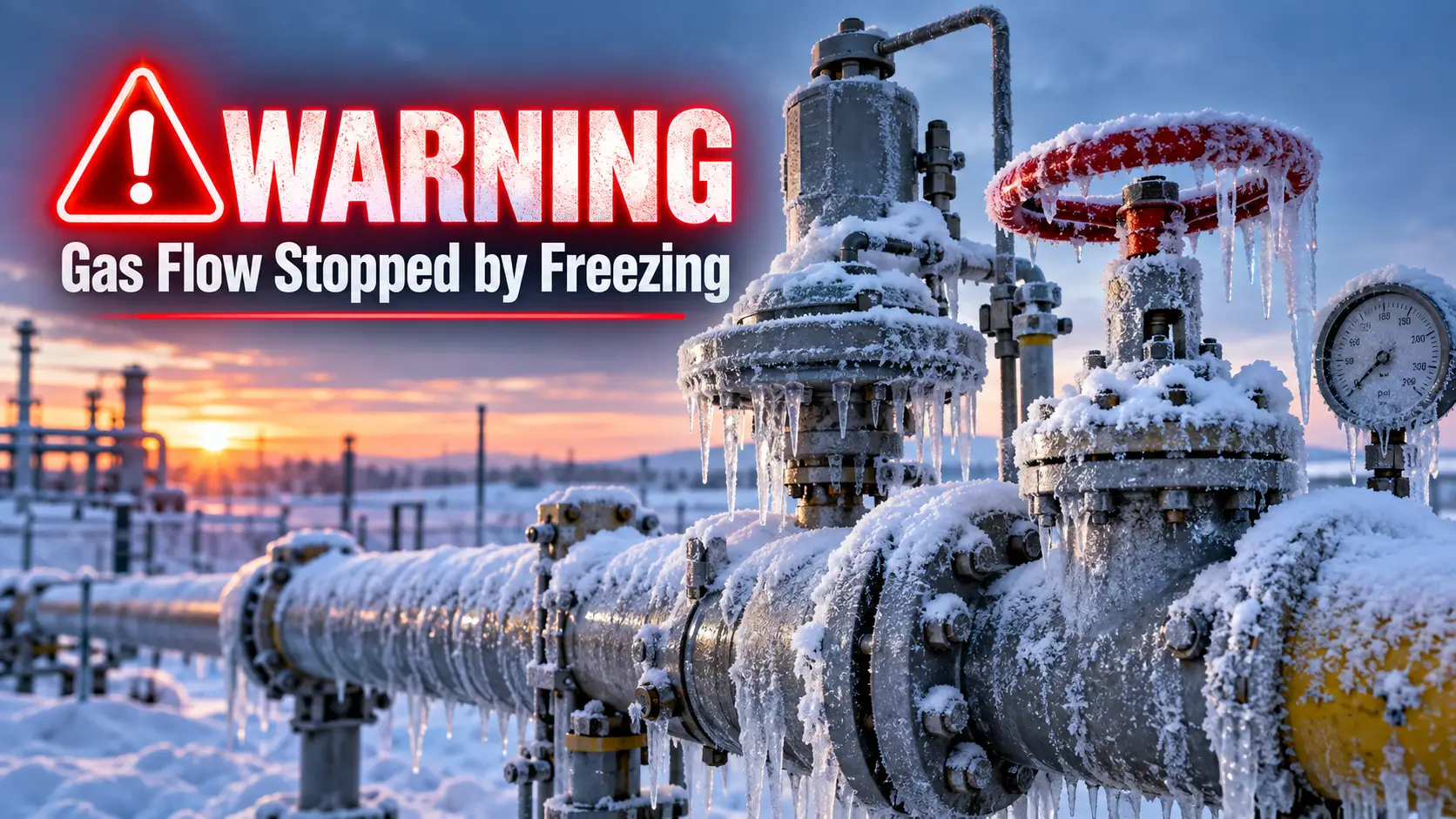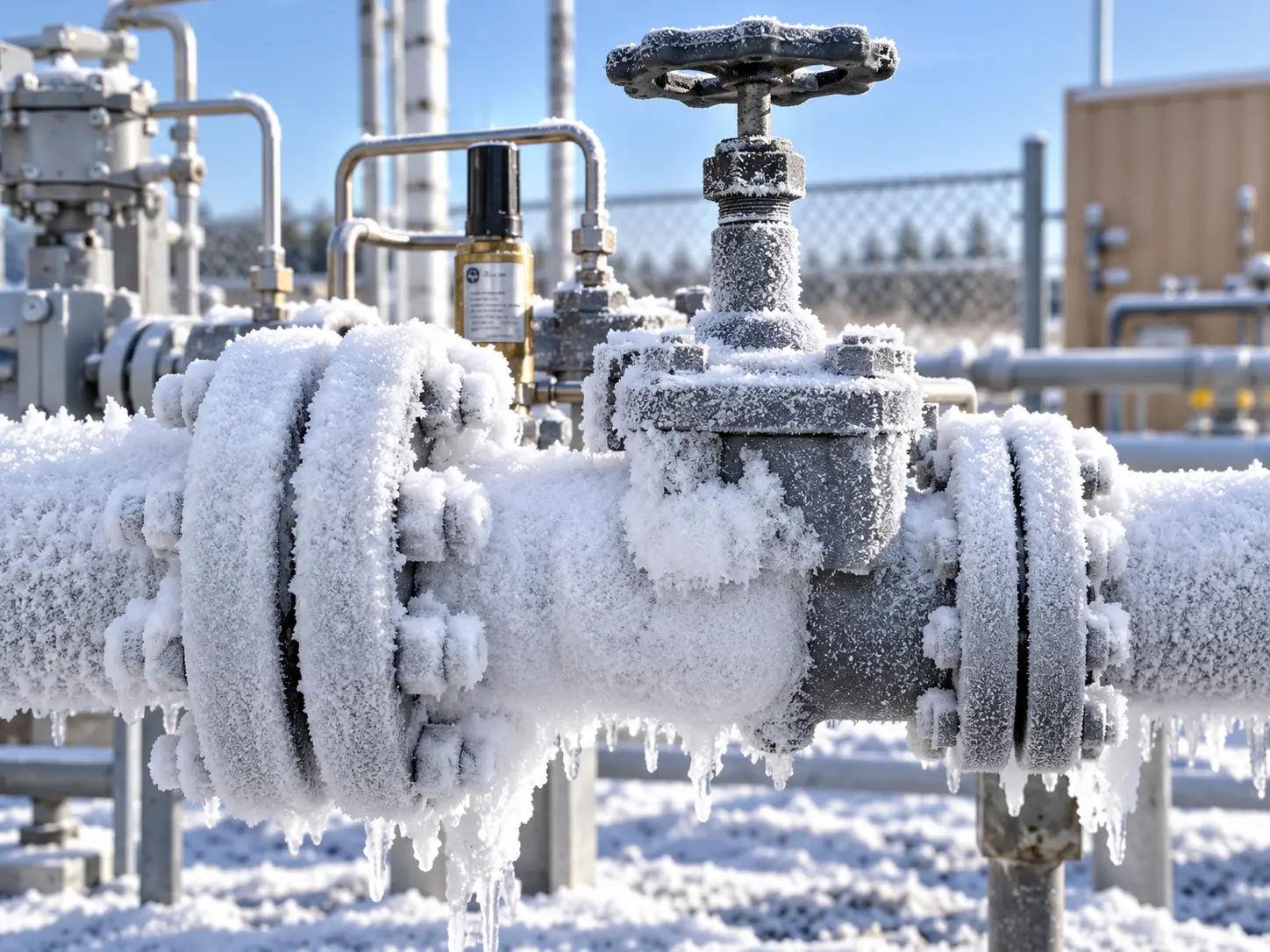
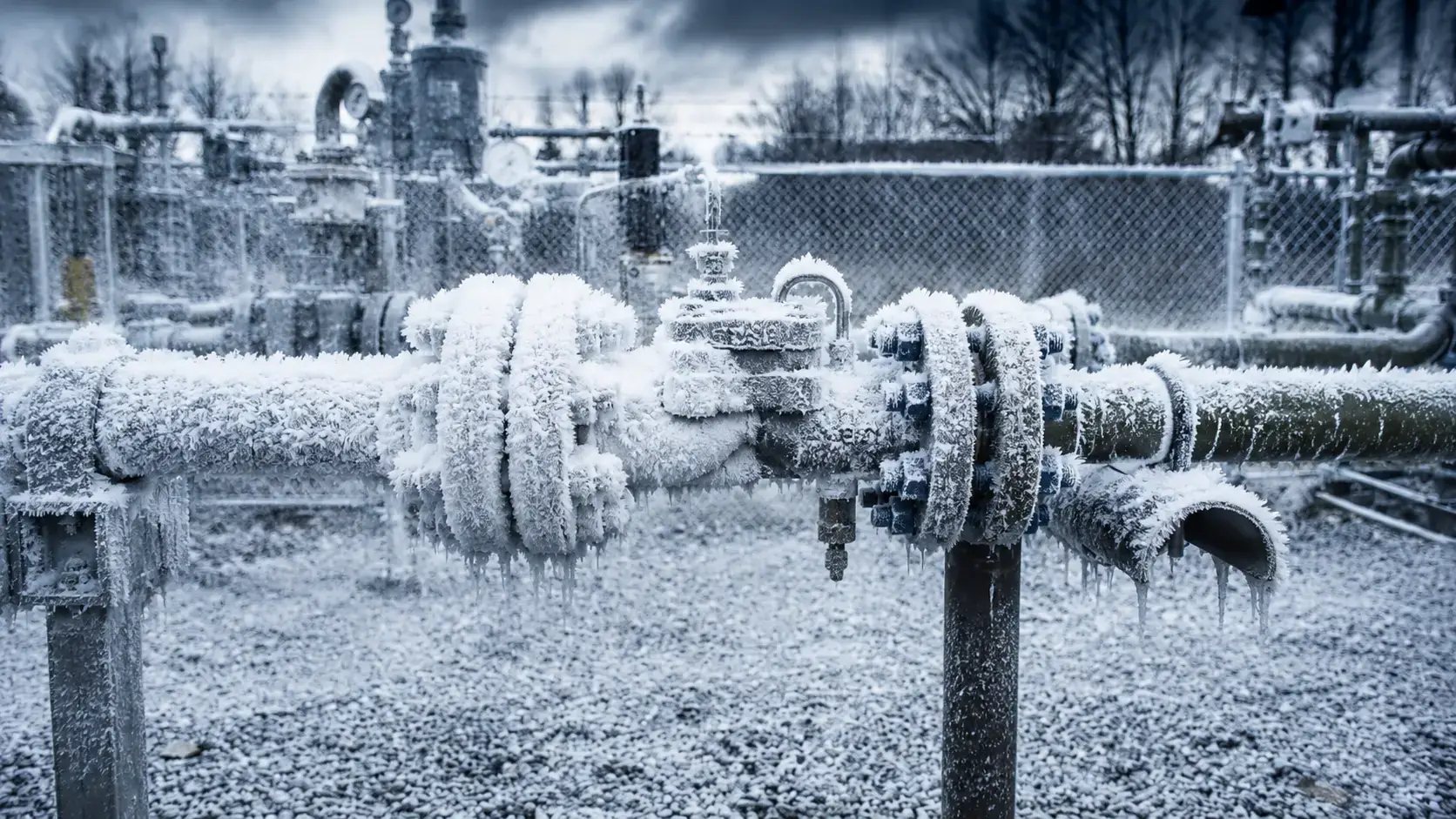
When you see your regulator and valves freezing over, it is easy to blame the weather. In many natural gas applications, though, pressure drop, cold gas, and moisture usually create the freeze-up.
Natural gas can cool quickly when it moves from high pressure to lower pressure. If moisture is present, that temperature drop can create frost, ice buildup, or hydrates around regulators, valves, pilots, chokes, and pipeline equipment.
Cold weather can make the problem worse, but it is not the only cause. Large pressure drops can create freezing conditions even during warmer months. With the right heating solution, operators can manage freeze-ups before frozen equipment causes downtime.
Regulator and Valves Freezing Over: What It Means
When regulator and valves freezing over becomes a repeated issue, the gas temperature is likely dropping low enough for moisture to freeze.
This often happens when gas passes through equipment such as:
- Pressure reducing regulators
- Control valves
- Chokes
- Pilot-operated regulators
- Instrument gas systems
- Pipeline equipment
- Other pressure-reducing components
A larger pressure drop can create a larger temperature drop. A common industry rule of thumb is that natural gas can lose about 6–8°F for every 100 psi of pressure reduction.
One large pressure cut can cool the gas quickly and increase the chance of freezing.
Why Regulators and Valves Freeze
Regulators and valves often freeze because of the Joule-Thomson effect.
The Joule-Thomson effect describes what happens when gas moves through a restriction and drops in pressure. As pressure drops, the gas can lose energy and temperature.
In simple terms:
Gas pressure drops. Gas temperature drops. Moisture freezes. Equipment starts having problems.
This matters in natural gas systems because a regulator or valve may take gas from a much higher pressure to a lower pressure that downstream equipment can use.
A large pressure reduction can make the gas cold enough for moisture to freeze. Ice can then form around or inside the equipment.
That ice can affect equipment performance, restrict flow, or damage components.
Moisture Makes Freeze-Ups Worse
Moisture turns a temperature drop into a bigger problem.
Even small amounts of moisture can freeze when the gas temperature gets low enough. As ice forms, it can build up around the regulator, valve, or pipeline surface.
Moisture can cause:
- Frost or ice buildup
- Frozen valve movement
- Pilot issues
- Blocked ports or passages
- Restricted flow
- Pressure instability
- Equipment that sticks or fails to respond
- Shutdowns or downtime
The ice you see on the outside may only be part of the problem. Inside the valve, regulator, or pipeline, ice can also restrict gas flow.
Can Regulators and Valves Freeze Even in the Summer?
Yes. Regulators and valves can freeze even when the outside temperature is not below freezing.
Freeze-ups do not always start with the weather. A large pressure drop inside the system can cool the gas enough to create ice.
If moisture is present, that temperature drop can create freezing conditions during warmer months.
Equipment can freeze during:
- Cold weather
- Wet weather
- Rain or snow
- Seasonal temperature changes
- High flow conditions
- Large pressure cuts
- Applications with wet gas
- Locations where pressure drops by hundreds of psi
In many applications, freezing is not just a winter problem. It is a pressure drop and moisture problem.
Common Signs of Regulator and Valves Freezing Over
If you are dealing with regulator and valves freezing over, you may notice:
- Frost or ice around the regulator body
- Ice forming around the valve
- Downstream pressure changing unexpectedly
- Reduced or restricted gas flow
- Pilot-operated regulators acting inconsistently
- Valves sticking or not moving correctly
- Equipment working after thawing, then freezing again later
- Shutdowns during cold or wet conditions
Repeated freeze-ups usually point to a system issue. A temporary thaw may get equipment moving again, but the problem can return if the pressure drop, cold gas, and moisture remain.
Why Thawing the Equipment Is Not a Long-Term Fix
Thawing frozen equipment may help in the moment, but it does not solve the cause of the freeze-up.
If the system still has pressure drop, moisture, and cold gas conditions, the regulator or valve can freeze again.
Freeze prevention should focus on managing temperature before ice causes downtime. The goal is not just to melt ice after it forms. The goal is to keep the gas and equipment warm enough so ice is less likely to form.
How Do You Prevent Regulators and Valves From Freezing?
You cannot avoid the Joule-Thomson effect, but you can manage it.
Common ways to manage freezing include:
- Improving pipeline design
- Reducing exposure to harsh weather when possible
- Using insulation where appropriate
- Removing or managing moisture
- Adding heat where the temperature drop happens
- Preheating gas before a large pressure drop
For many natural gas applications, adding heat directly to the equipment or gas stream is one of the most practical ways to reduce freeze-up problems.
That is where catalytic heating comes in.
How Catalytic Heating Helps Prevent Freeze-Ups
Catalytic heating places steady heat where the system needs it most.
Instead of waiting for a regulator or valve to freeze, a catalytic heater can warm the equipment and lower the chance of ice forming.
Operators commonly use catalytic heaters around equipment such as:
- Regulators
- Valves
- Chokes
- Pilots
- Instrument gas systems
- Pipeline equipment
The purpose is simple:
Keep critical equipment warm enough to help prevent freezing, flow restriction, and downtime.
Catco designs Catalytic Heaters to provide focused heat for oil and gas equipment that needs freeze protection.
Where Catco Products Fit In
Catco provides freeze-prevention solutions that help protect natural gas equipment from pressure drop, cold gas, moisture, and harsh field conditions.
Different applications need different types of heat. Some systems need direct heat around a regulator or valve. Others need warmed gas before the pressure drop. Some applications need warm gas delivered directly into pilots or instrumentation.
Here are the main Catco solution paths.
Catco Catalytic Heaters
Catco Catalytic Heaters provide steady radiant heat for equipment that needs freeze protection.
They help warm equipment exposed to cold gas, pressure drops, moisture, and weather conditions.
Catalytic heaters can support larger freeze-prevention systems, including heated enclosures, Pipeline Packs, and instrument gas heating systems.
Catco Heated Enclosure Packages
Catco Heated Enclosure Packages surround equipment like regulators and valves and direct heat where the system needs it.
A heated enclosure helps hold and focus heat around the equipment. As the metal warms, it can help reduce the impact of the Joule-Thomson effect.
Operators commonly use heated enclosures for:
- Regulators
- Valves
- Control equipment
- Pilot-related equipment
- Applications where the pressure drop happens at the equipment
If the freezing problem happens directly at the regulator or valve, a heated enclosure may be the right solution to review.
Catco Pipeline Packs
Catco Pipeline Packs help preheat gas in the pipeline before it reaches a major pressure drop.
This can help when the system needs more heat before the gas reaches a regulator, valve, or other equipment where freezing could happen.
A Pipeline Pack does not focus on one specific valve the same way an enclosure does. Instead, it applies heat to the pipeline itself so the gas has more temperature before it reaches the freeze-risk area.
Pipeline Packs can help when:
- The system has a large pressure drop
- The gas needs heat before regulation
- One equipment enclosure cannot provide enough heat
- The system has downstream freeze risk
In simple terms, an enclosure heats the equipment. A Pipeline Pack helps preheat the gas in the pipe.
Catco Instrument Gas Heaters
A Catco Instrument Gas Heater, also called an IGH, warms gas before it reaches equipment like pilot-operated regulators, instrumentation, and related applications.
The IGH passes process gas through heat exchange tubing inside a heated enclosure. As the gas moves through the heat exchanger, it picks up heat before flowing to the equipment that needs warm gas.
Operators often use Instrument Gas Heaters when cold gas could affect:
- Pilot-operated regulators
- Instrument supply gas
- Control systems
- Sensitive downstream equipment
- Applications that need a steady warm gas supply
This makes the IGH a strong option when the application needs more than outside equipment heat. It can feed warm gas directly where the system needs it.
Catco Steady Heat Controller
In some applications, gas can become too hot after the system warms it. This matters when warm gas feeds pilots, instruments, or equipment with internal components that need protection.
The Catco Steady Heat Controller mixes hot output gas with cold input gas to deliver a more controlled gas temperature.
This helps provide warm gas while reducing the risk of sending gas that is too hot into sensitive equipment.
For applications where consistent outlet temperature matters, the Steady Heat Controller can play an important role.
Simple Breakdown: Why It Freezes and What Helps
Here is the problem in simple terms:
Problem: Your regulator and valves are freezing over.
Cause: Gas pressure drops and the gas temperature falls.
Moisture Risk: Moisture freezes or hydrates form.
Result: Regulators, valves, pilots, and chokes may stop working correctly.
Solution: Add the right freeze-prevention method, such as catalytic heating, a heated enclosure, a Pipeline Pack, or an Instrument Gas Heater.
Which Catco Solution Should You Look At?
The right solution depends on where the freezing happens.
A heated enclosure may be the best place to start when ice forms directly on a regulator or valve.
A Pipeline Pack may help when the gas needs more heat before it reaches a pressure drop.
An Instrument Gas Heater may be the better fit when the system needs warm gas delivered into a pilot, instrument, or regulator.
The Steady Heat Controller can help when the application needs controlled outlet gas temperature.
Every application is different, but the goal stays the same: keep the gas flowing and help prevent freeze-related downtime.
Final Thoughts
So, why are your regulator and valves freezing over?
Most of the time, pressure drop, temperature loss, and moisture create the problem. When natural gas pressure drops, the gas temperature can also drop. If the temperature falls low enough, moisture can freeze and create problems around regulators, valves, pilots, chokes, and pipelines.
This can happen in winter, during wet weather, or even in warmer months when the pressure drop is large enough.
Freeze-ups can create equipment issues, restrict flow, and cause downtime. The right heating solution can help manage those risks before freezing stops the system.
Catco helps provide freeze-prevention solutions for natural gas applications through Catalytic Heaters, Heated Enclosure Packages, Pipeline Packs, Instrument Gas Heaters, and Steady Heat Controllers.
If your regulators or valves are freezing over, Catco can help you review which solution may fit your application.
FAQ
Why is my regulator and valves freezing over?
Your regulator and valves may freeze when gas pressure drops and the gas temperature falls. If moisture is present, that moisture can freeze and create ice buildup or hydrates.
What causes a natural gas regulator to freeze?
Pressure reduction, cold gas, moisture, and the Joule-Thomson effect can cause a natural gas regulator to freeze.
Can valves freeze even when it is not freezing outside?
Yes. Valves and regulators can freeze in warmer weather if the pressure drop is large enough and moisture is present.
What is the Joule-Thomson effect?
The Joule-Thomson effect describes the temperature drop that can happen when gas moves from high pressure to lower pressure.
How much temperature can natural gas lose during pressure reduction?
A common rule of thumb is that natural gas can lose about 6–8°F for every 100 psi of pressure reduction.
How do you stop regulators and valves from freezing?
You can help prevent freeze-ups by managing moisture, improving design, insulating where needed, and adding heat where the gas or equipment loses temperature.
What Catco product helps with frozen regulators and valves?
The best solution depends on the application. Catco solutions may include Catalytic Heaters, Heated Enclosure Packages, Pipeline Packs, Instrument Gas Heaters, and Steady Heat Controllers.
What is the difference between a heated enclosure and a Pipeline Pack?
A heated enclosure focuses heat around a regulator, valve, or piece of equipment. A Pipeline Pack helps preheat the gas in the pipeline before it reaches the equipment.
What does an Instrument Gas Heater do?
An Instrument Gas Heater warms gas before it flows to pilot-operated regulators, instrumentation, or related equipment that needs warm gas to operate reliably.