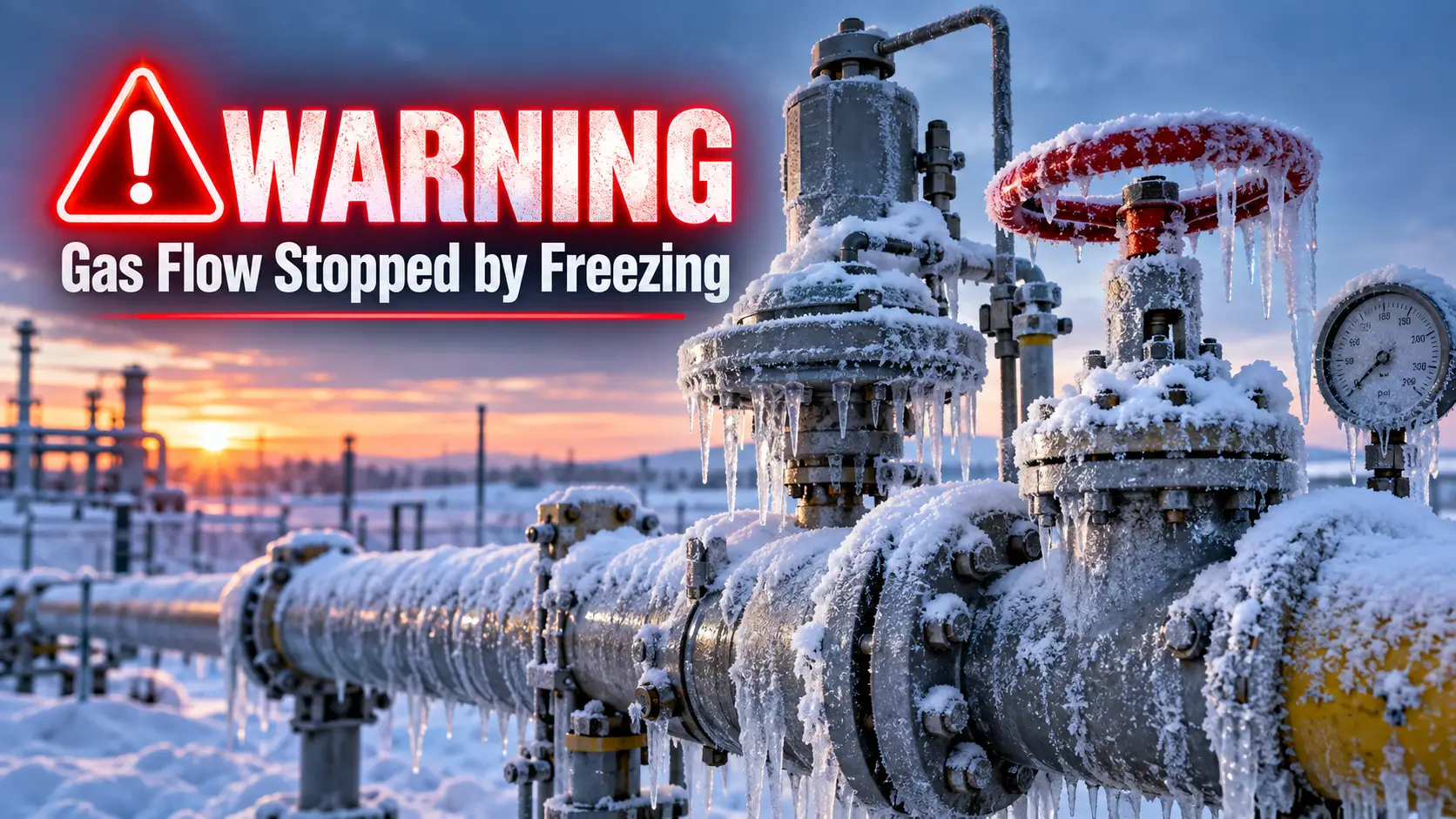
Natural Gas Freeze Ups: What Happens When Freezing Stops Gas Flow?
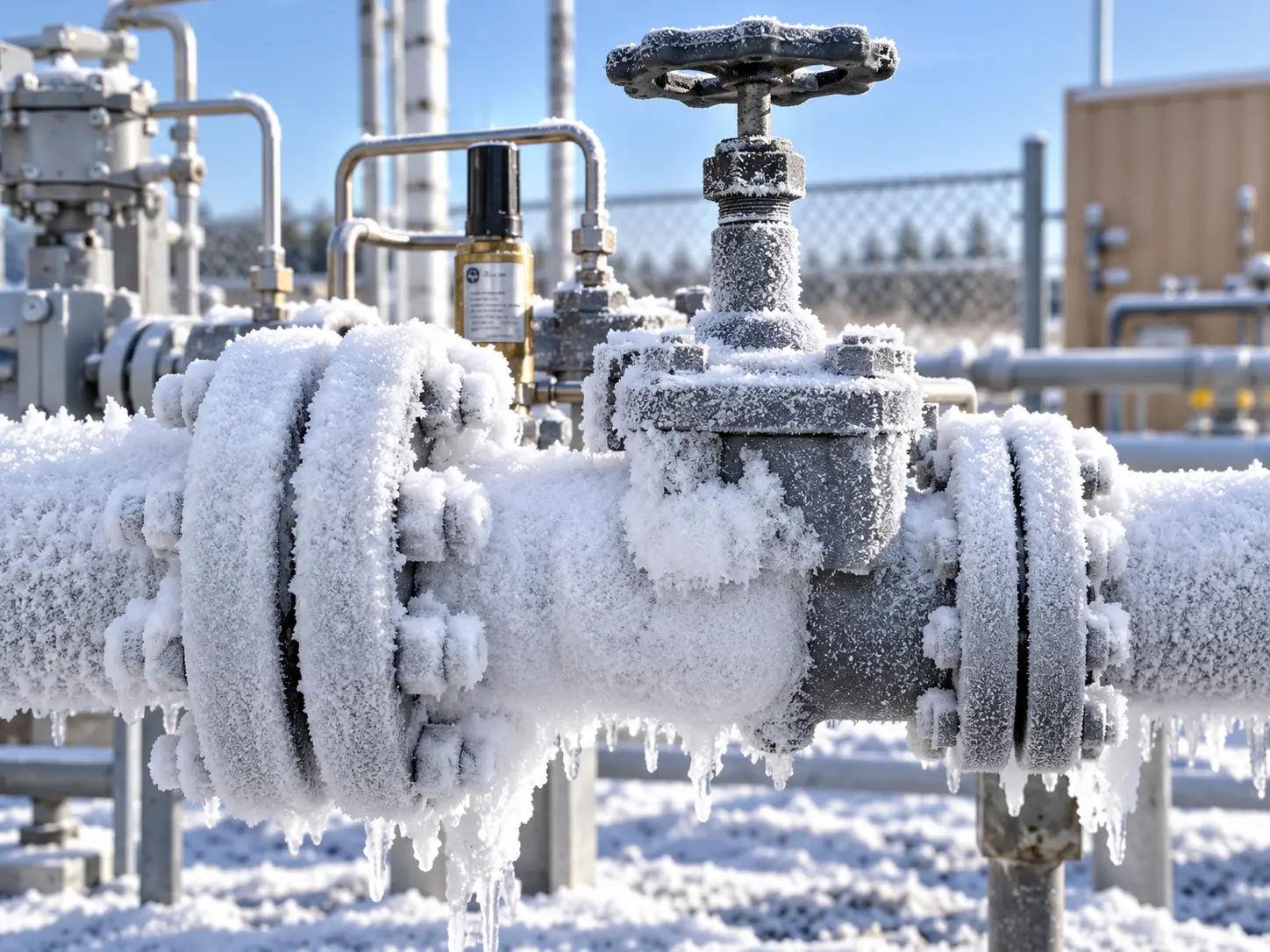
A frozen regulator or valve can look like a small equipment problem.
But when freezing restricts natural gas flow, the consequences can extend far beyond a single component.
Reduced gas flow can affect production, pipeline pressure, regulator performance, pilot systems, industrial processes and even natural gas fired electric generation. During major winter storms, freeze related production losses have removed billions of cubic feet of natural gas per day from the U.S. supply system. U.S. Energy Information Administration
Understanding those consequences starts with an important distinction.
Natural gas itself is generally not freezing solid inside the pipe under normal field conditions. More often, water and other liquids freeze, gas hydrates form under the right pressure and temperature conditions, or equipment becomes cold enough that flow is restricted or components can no longer operate correctly.
The result can be the same:
Natural gas stops moving where it needs to go.
Quick Answer: What Happens When Natural Gas Equipment Freezes?
When freezing or hydrate formation restricts a natural gas system, gas flow and pressure can decrease or stop entirely.
That can prevent valves, regulators, pilots and instrumentation from operating as intended. If enough equipment or production infrastructure is affected at the same time, the result can spread into reduced natural gas production, lower pipeline pressures, interrupted industrial operations and shortages of fuel for natural gas fired power generation.
The consequences depend on where the freeze occurs and how important that piece of equipment is to the larger system.
Why Do Natural Gas Systems Experience Freeze Ups?
Freeze problems usually involve a combination of temperature, pressure and moisture.
When pressurized natural gas passes through a regulator, valve, choke or other pressure reducing device, the gas temperature can decrease because of the Joule Thomson effect.
If the gas is already cold, a large pressure reduction can push temperatures even lower.
When moisture is present, those conditions can allow ice or gas hydrates to form and restrict flow.
Cold outdoor weather can make the situation worse, but freeze problems are not limited to days when the outside temperature is below 32°F. A significant pressure reduction can create very cold gas temperatures even when the surrounding air is warmer.
That is why visible frost is often a symptom of what is happening thermodynamically inside the system, rather than the entire cause of the problem.
Catco’s existing natural gas freeze prevention guidance describes the same relationship between temperature, pressure and moisture. Catco USA
What Happens When Gas Flow Starts to Become Restricted?
A freeze problem does not always create an immediate total shutdown.
It may begin as a gradual reduction in performance.
A regulator can begin frosting.
Pressure can become unstable.
A control valve may respond more slowly.
Pilot gas can become too cold.
A choke or small tubing connection can begin restricting flow.
Instrumentation may receive inadequate gas supply.
If temperatures continue falling or the blockage continues growing, a partial restriction can eventually become a no flow condition.
That is where a local freeze problem can turn into an operational problem.
The Consequences of Natural Gas Flow Being Halted
The exact impact depends on where the interruption occurs, but the chain of consequences can include:
Loss of gas flow. Ice, hydrates or frozen equipment can restrict the passage available for gas and reduce the amount of product moving downstream.
Pressure problems. Restricted supply can reduce downstream pressure or prevent regulators from maintaining their intended operating conditions.
Pilot and instrumentation problems. Equipment that depends on natural gas for pilots or pneumatic controls may not receive the gas pressure, flow or temperature it requires.
Equipment shutdown. A valve, regulator, choke, well, processing unit or other system may need to be taken offline until normal operating conditions are restored.
Production losses. If wells or gathering systems experience freeze offs, natural gas production itself can decline.
Downstream supply shortages. Large production losses can reduce pipeline supply and pressure, particularly when demand is simultaneously increasing during severe cold.
Industrial downtime. Facilities that depend on reliable natural gas supply may have to reduce production or shut processes down.
Electric grid consequences. Natural gas fired generating plants depend on fuel availability. Large gas supply disruptions can therefore contribute to electricity reliability problems.
Higher operating costs. Lost production, emergency maintenance, equipment repairs, labor, restart procedures and high commodity prices can all increase the economic impact of a freeze event.
Freeze Ups Can Affect More Than One Facility
One reason natural gas freeze prevention matters is that the natural gas system is interconnected.
Consider a simple chain:
Wellhead → gathering → processing → pipeline → regulator station → customer
A flow interruption near the beginning of that chain can affect equipment and customers farther downstream.
This became extremely visible during Winter Storm Uri in February 2021.
EIA reported that Texas natural gas production fell from about 21.3 billion cubic feet per day to a daily low of 11.8 Bcf/d during the cold snap, a decline of almost 45 percent. EIA attributed most of the decline to freeze offs involving water and other liquids freezing at wellheads and in gathering lines. U.S. Energy Information Administration
Across the month, U.S. gross natural gas withdrawals fell 7 percent from January, while Texas production fell 15 percent. EIA called the national decline the largest monthly decline on record at the time. U.S. Energy Information Administration
Those numbers show why a freeze problem is not necessarily just a maintenance inconvenience.
When enough natural gas infrastructure is affected simultaneously, the available gas supply can materially decrease.
What Happens When Gas Supply Falls While Demand Is Rising?
Severe winter weather creates an especially difficult combination.
Homes and businesses need more natural gas for heating.
Power plants may also need more fuel to meet increased electricity demand.
At exactly the same time, cold weather can reduce natural gas production and disrupt transportation infrastructure.
During February 2021, EIA estimated U.S. natural gas demand reached 148.3 Bcf on February 14 while dry gas production was being reduced by freeze offs. Underground storage withdrawals reached 338 Bcf for the week ending February 19, the second largest reported weekly withdrawal at the time. U.S. Energy Information Administration
That is the broader consequence of interrupted gas flow:
supply can fall precisely when the system needs the most gas.
Natural Gas Freeze Ups Can Affect Electricity Reliability
Natural gas and electricity systems are increasingly connected because many generating plants depend on natural gas as their fuel source.
During Winter Storm Uri, the FERC and NERC investigation found that natural gas fuel supply issues were a major contributor to generating unit problems. According to FERC, 87 percent of unplanned generation outages attributed to fuel issues involved natural gas. The investigation also found that 43.3 percent of natural gas production declines were caused by freezing temperatures and weather. Federal Energy Regulatory Commission
A similar problem appeared during Winter Storm Elliott in December 2022.
FERC reported that freeze related production declines contributed to falling pipeline pressures and noted production declines of approximately 23 percent in the Marcellus and 54 percent in the Utica during the event. Some pipeline systems faced pressures low enough to threaten reliability. Federal Energy Regulatory Commission
This does not mean every frozen regulator creates an electric grid problem.
It shows what can happen when freeze related failures occur across many parts of the natural gas system at the same time.
Freeze Related Supply Problems Can Also Affect Natural Gas Prices
When production decreases at the same time demand increases, the result can be severe supply and demand imbalance.
During the February 2021 winter storm, the Henry Hub natural gas spot price reached $23.86 per MMBtu on February 17. EIA reported that the combination of weather related production outages and increased demand contributed to the price spike. U.S. Energy Information Administration
For an individual operator, the economic consequences may be more direct:
Lost production.
Lost throughput.
Emergency field work.
Replacement equipment.
Unplanned labor.
Process restart costs.
Customer delivery problems.
The important point is that the cost of a freeze event can extend far beyond the price of the frozen component itself.
Where Can Freeze Problems Occur in a Natural Gas System?
Freeze related interruptions can occur at several points in the natural gas supply chain.
At production sites, water and other liquids can freeze around wellheads and gathering infrastructure.
Within processing and pipeline facilities, low temperatures can affect valves, regulators, chokes, piping and controls.
At pressure reducing stations, Joule Thomson cooling can create significant temperature loss across regulators or valves.
Pilot and instrument gas systems can also experience problems when the gas feeding them becomes too cold.
These problems are related, but they do not always require the same solution.
That distinction is important when diagnosing a recurring freeze problem.
The Goal Is to Prevent the Restriction Before Flow Stops
Waiting for equipment to freeze and then thawing it treats the failure after it has already affected the operation.
A stronger freeze prevention strategy starts by identifying where the system is losing temperature.
If the problem occurs directly at a valve or regulator, heat may need to be applied around that equipment.
If the process gas becomes too cold before a major pressure reduction, the gas stream may need to be preheated.
If pilots or instrumentation are receiving gas that is too cold, heating the instrument gas may be the more targeted approach.
Catco currently uses those same distinctions across Heated Enclosure Packages, Pipeline Packs and Instrument Gas Heaters. Catco USA
Heated Enclosure Packages
A Heated Enclosure Package places a catalytic heater near freeze prone equipment such as a regulator, control valve or choke.
The enclosure helps contain and direct heat toward the equipment.
This approach makes sense when the temperature problem is concentrated around a specific component. Catco USA
Pipeline Packs
A Pipeline Pack applies heat to the pipe so additional thermal energy can be introduced into the gas stream upstream of a regulator, valve, choke or other equipment.
Catco describes Pipeline Packs as a method of providing equipment with a heated stream of gas to help prevent hydrate formation and freeze ups. Catco USA
Instrument Gas Heaters
An Instrument Gas Heater focuses on the smaller gas stream feeding pilots and instrumentation.
Rather than heating the entire pipeline, the IGH adds heat to the instrument gas before it continues toward the downstream pilot or control equipment.
This can be useful when the freeze problem is associated specifically with pilot or instrument gas.
Preventing Freeze Related Downtime Starts With the Application
There is no single heating method that is correct for every natural gas freeze problem.
Before selecting a solution, look at the actual operating conditions.
Where is the largest pressure reduction?
What is the incoming gas temperature?
Where is frost or ice appearing?
What equipment stops operating?
Is moisture present?
Is the problem occurring in the process gas, directly at the equipment or in the pilot and instrument gas?
Those questions help determine where additional heat can have the greatest effect.
Frequently Asked Questions About Natural Gas Freeze Ups
Can natural gas actually freeze in a pipeline?
Under normal natural gas operating conditions, the methane rich gas stream itself generally is not freezing solid. Freeze problems more commonly involve water, other liquids, hydrate formation or equipment becoming cold enough to restrict operation.
What is a natural gas freeze off?
A freeze off is a temporary interruption or reduction in natural gas production caused by cold weather. EIA describes freeze offs as events where water and other liquids in raw natural gas freeze at wellheads or in gathering lines and block gas flow. U.S. Energy Information Administration
Can a frozen regulator stop natural gas flow?
Yes. Depending on the nature and severity of the freeze problem, ice, hydrates or frozen internal components can restrict regulator operation and gas flow.
Why do natural gas regulators get so cold?
A major pressure reduction can lower natural gas temperature through the Joule Thomson effect. Cold incoming gas and low outdoor temperatures can make the temperature reduction more severe.
Can natural gas systems freeze when the outdoor temperature is above 32°F?
Yes. Gas temperature after a significant pressure reduction can be lower than the surrounding ambient temperature, which means freeze conditions can occur even when outdoor air is above freezing.
What happens if natural gas production is interrupted during extreme cold?
Reduced production can tighten gas supply while heating and electricity demand are rising. Large events can contribute to lower pipeline pressures, high commodity prices and difficulty supplying natural gas fired power generators. U.S. Energy Information Administration
How can natural gas freeze related downtime be reduced?
The first step is identifying where temperature loss and freezing occur. Possible strategies include controlling moisture, maintaining equipment, protecting components from harsh weather, heating individual valves or regulators, preheating the process stream and heating pilot or instrument gas.
Keep Natural Gas Flowing Before a Freeze Becomes a Shutdown
A frozen regulator, valve or pilot may start as a localized equipment problem.
But reliable natural gas systems depend on continuous flow.
When freezing restricts that flow, the consequences can spread through production, transportation, industrial operations and downstream energy systems.
That is why natural gas freeze prevention should focus on more than removing visible ice.
The goal is to understand where the gas loses temperature, where moisture creates risk and where heat can be applied before flow is interrupted.
Catco develops heating solutions for natural gas regulators, valves, pipelines, pilots and instrumentation designed around those different freeze prevention applications.