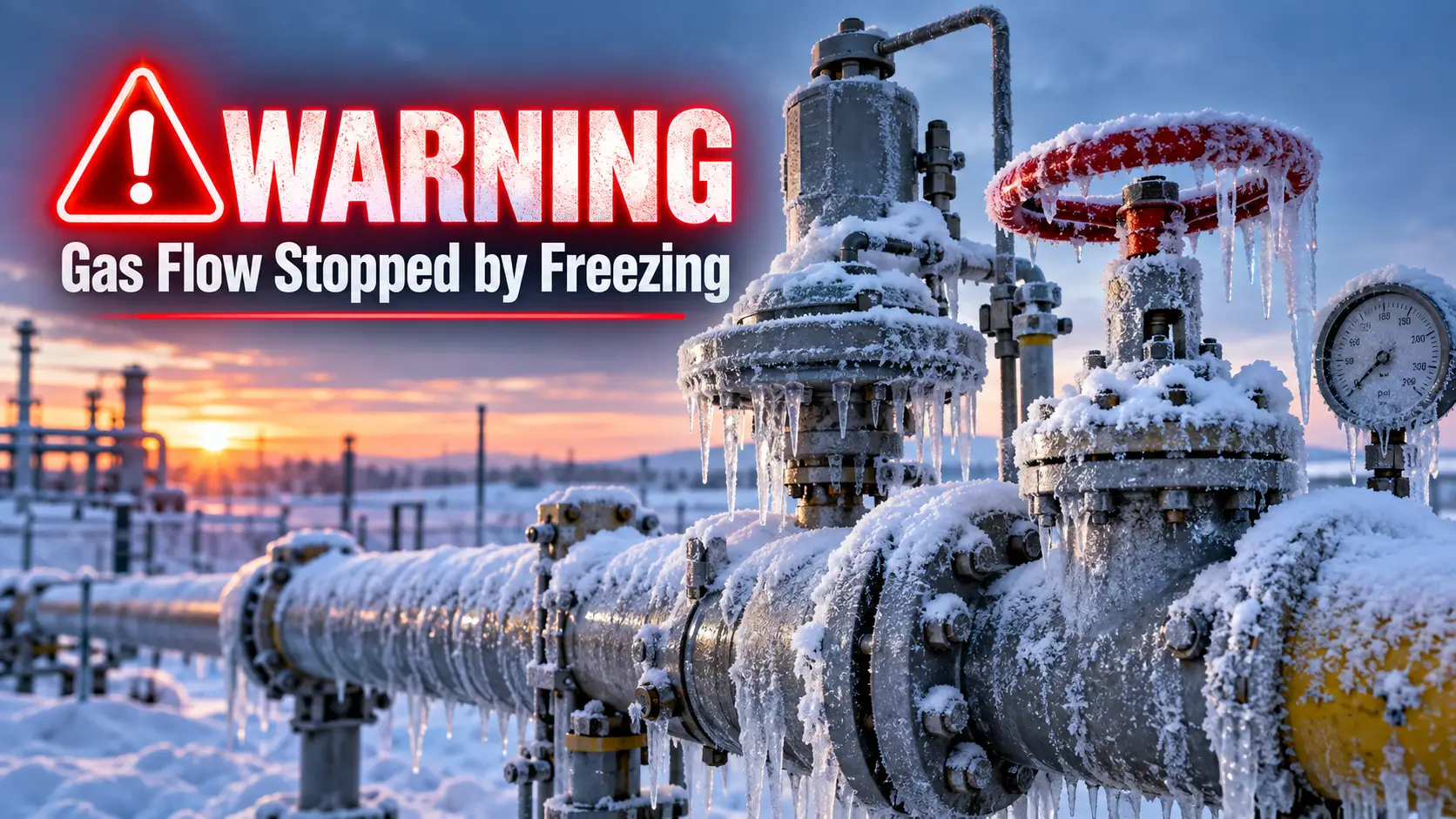
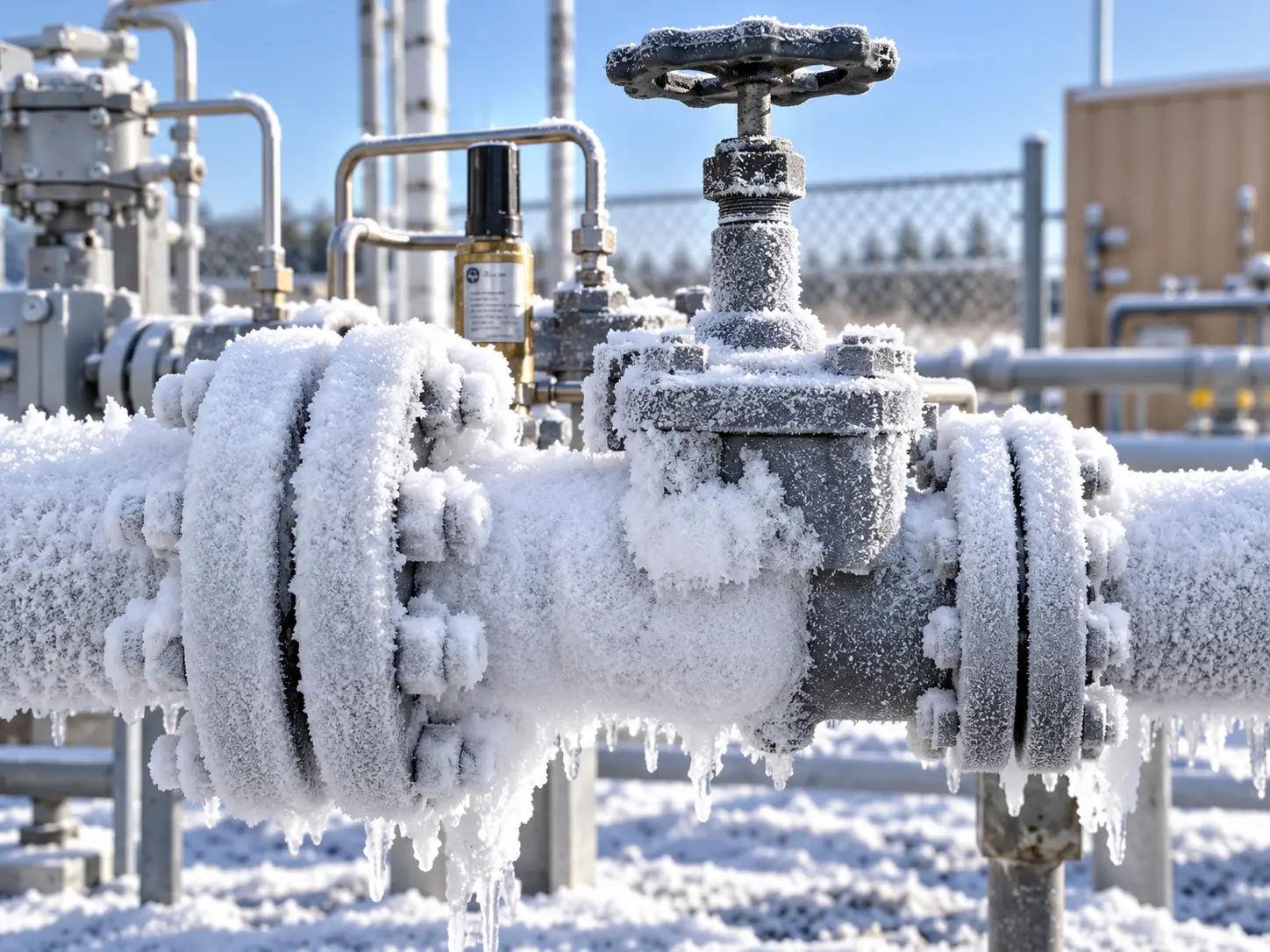
Cold weather can expose problems in a natural gas system that may go unnoticed during warmer months.
Regulators begin frosting. Valves stop operating correctly. Pilot systems become unreliable. Pressure changes. Gas flow becomes restricted. In severe cases, equipment can freeze and operations can shut down.
But winter weather is only part of the problem.
Natural gas systems can also experience significant cooling when gas moves from high pressure to lower pressure. Combine that pressure reduction with cold incoming gas and moisture, and conditions can develop that allow ice or gas hydrates to restrict equipment and piping.
Understanding natural gas freeze prevention starts with understanding three things:
Temperature. Pressure. Moisture.
Quick Answer: How Do You Prevent a Natural Gas System From Freezing?
Natural gas freeze prevention involves identifying major pressure drops, controlling moisture, inspecting regulators and valves, maintaining filters and drip pots, protecting equipment from severe weather, and adding heat where temperature loss creates a freeze risk.
Depending on where the problem occurs, heat may be applied directly around equipment or used to preheat the gas before it reaches a major pressure reduction.
Catco provides several natural gas freeze prevention solutions for regulators, valves, chokes, pipelines, pilots, and instrumentation.
Do Natural Gas Pipes Actually Freeze?
When someone says a natural gas line or regulator has frozen, the natural gas itself usually is not simply turning into ice.
One major concern is water inside the system.
Water can exist as vapor or liquid in a natural gas stream. Under certain combinations of pressure and temperature, water and natural gas can also form gas hydrates.
Gas hydrates are solid, ice like structures containing water and gas molecules. If enough hydrate material forms inside a pipeline, valve, regulator, or other component, it can restrict or even block gas flow.
The U.S. Department of Energy explains that methane hydrates form when methane and water are present under suitable pressure and low temperature conditions. Learn more about gas hydrates from the U.S. Department of Energy.
This is why moisture management is an important part of freeze prevention.
Why Do Natural Gas Systems Freeze More Often During Winter?
Winter creates a lower starting temperature for both the natural gas and the equipment handling it.
Imagine gas entering a regulator during warm weather at 70°F.
Now imagine the same system operating during winter when the piping, regulator, and incoming gas are already significantly colder.
If that gas then experiences a major pressure reduction, there is much less temperature margin available before freezing conditions can develop.
Cold ambient temperatures can also increase heat loss from:
- Pipelines
- Regulators
- Control valves
- Chokes
- Pilot systems
- Instrument tubing
- Filters
- Other exposed equipment
Wind, snow, freezing rain, and extended cold conditions can make the situation worse.
However, outside temperature is only one part of the problem.
What Does Pressure Drop Have to Do With Natural Gas Freezing?
Pressure reduction can cause natural gas to cool.
This behavior is commonly associated with the Joule Thomson effect.
When gas passes through equipment such as a regulator, choke, or control valve and moves from higher pressure to lower pressure, the temperature of the gas can decrease under typical natural gas operating conditions.
Emerson describes the Joule Thomson effect as cooling created through a significant pressure reduction across a valve. Read Emerson’s technical overview of Joule Thomson control valves.
This matters because a natural gas system may already be cold before the pressure reduction occurs.
The system can therefore experience:
Cold incoming gas + pressure reduction + additional temperature loss + moisture = increased freeze risk
Catco explains this issue in more detail in our guide to the Joule Thomson effect and natural gas regulator freeze prevention.
Where Do Natural Gas Freeze Ups Commonly Occur?
Operators should pay particular attention to areas where pressure changes, low temperatures, and moisture can occur together.
Common problem areas can include:
- Pressure regulators
- Control valves
- High pressure regulators
- Chokes
- Pilot operated regulators
- Pilot gas lines
- Instrument gas systems
- Filters
- Drip pots
- Small tubing
- Pipeline pressure reduction points
Catco has additional resources specifically covering freeze prevention for control valves, freeze prevention for chokes, and pilot operated regulator freeze prevention.
What Are the Warning Signs of a Natural Gas Freeze Problem?
Freeze related problems do not always begin with a completely frozen pipeline.
Your system may provide warning signs first.
Watch for:
- Repeated frost around the same regulator or valve
- Pressure fluctuations
- Reduced or inconsistent gas flow
- Pilot problems
- Control valves behaving inconsistently
- Regulators that operate normally after thawing and then freeze again
- Problems that repeatedly appear during cold or wet conditions
- Frost appearing around major pressure reduction points
Repeated freezing around the same equipment is worth investigating.
Thawing equipment may restore operation temporarily, but it does not remove the conditions that caused the freeze.
For a closer look at this issue, read Why Is My Regulator and Valves Freezing Over?.
7 Ways to Help Prevent Natural Gas Freeze Ups
Preparing before temperatures fall gives operators more options than responding after equipment has already frozen.
1. Find Your Major Pressure Drops
Start by mapping where gas pressure changes throughout the system.
Ask questions such as:
Where is our highest inlet pressure?
Where are our biggest pressure reductions?
Which regulators or valves froze last winter?
Where have we seen frosting?
Are pilots or instrument systems experiencing problems?
These questions can help identify the areas that deserve closer inspection before winter.
2. Manage Moisture
Temperature is only part of the freeze equation.
Moisture should also be investigated.
The U.S. Department of Energy notes that dehydration is used in natural gas systems to remove water and help prevent hydrate formation in pipelines and equipment.
Depending on the system, winter preparation may include inspecting:
- Gas dehydration systems
- Filters
- Separators
- Drip pots
- Low points where liquids can accumulate
A recurring freeze problem should not automatically be treated as only a heating problem.
Understanding where moisture is coming from can be just as important.
3. Inspect Regulators, Filters, Valves and Drip Pots
Winter can turn a small maintenance issue into a major operating problem.
Before temperatures fall, inspect equipment that plays a role in gas pressure, moisture management, or flow.
Look for contamination, restriction, damage, or components that have not been serviced recently.
Pay particular attention to small pilot and instrument lines. A large regulator can appear normal while a much smaller pilot system becomes the reason equipment stops operating correctly.
4. Reduce Unnecessary Environmental Exposure
Wind and cold ambient air can increase heat loss from exposed equipment.
Weather protection, insulation, and enclosures can help reduce exposure in appropriate applications.
However, simply covering a frozen regulator does not automatically solve the problem.
If the primary temperature loss occurs because gas is undergoing a significant pressure reduction, the system may require additional heat.
The solution should address where the temperature is being lost, not simply where frost is visible.
5. Apply Heat Directly Around Freeze Prone Equipment
If freezing is concentrated around a regulator, valve, choke, or similar component, applying heat directly around the equipment may help maintain operating temperature.
Catco Heated Enclosure Packages position a catalytic heater near the protected equipment while a stainless steel enclosure helps contain and direct infrared heat toward the equipment.
This approach is commonly used when freeze risk is concentrated around equipment such as:
- Regulators
- Control valves
- Chokes
- Pressure reducing equipment
The goal is not to wait for the equipment to freeze and then thaw it.
The goal is to provide heat where it is needed before freezing interrupts operation.
6. Preheat the Gas Before a Major Pressure Reduction
Sometimes heating the valve or regulator itself is not the only option.
Another strategy is to give the gas additional temperature before it reaches the pressure reduction.
Catco Pipeline Packs position catalytic heaters adjacent to existing piping upstream of regulators, valves, chokes, and other equipment.
The system heats the pipe and increases the temperature of the material flowing through it before it reaches the downstream equipment.
This approach can be useful when the freeze problem is closely related to a major pressure reduction or when heating the gas stream upstream better matches the application.
7. Protect Pilot and Instrument Gas Systems
Do not overlook pilot gas.
A small amount of cold gas feeding a pilot or instrument system can create an operating problem even when the larger piece of equipment appears normal.
Catco Instrument Gas Heaters use stainless steel heat exchange tubing positioned in front of a catalytic heater to increase the temperature of gas or air flowing through the unit.
Instrument Gas Heaters are commonly used for gas supplied to pilot operated regulators, valves, and other instrumentation.
In simple terms:
Cold gas enters. Heat is added. Warmer gas is delivered to the equipment that needs it.
Heated Enclosure vs Pipeline Pack vs Instrument Gas Heater
Different freeze problems require different approaches.
Heated Enclosure Package
Consider a Heated Enclosure Package when heat needs to be concentrated around a regulator, valve, choke, or other specific piece of equipment.
Pipeline Pack
Consider a Pipeline Pack when the gas stream or pipe needs additional temperature before the gas reaches downstream equipment or a major pressure reduction.
Instrument Gas Heater
Consider an Instrument Gas Heater when heated gas needs to be delivered directly to a pilot, instrumentation system, regulator, or similar application.
Every application is different. Pressure, flow, temperature, fuel conditions, equipment, and the location of the freeze problem should all be reviewed when selecting a solution.
Does Insulation Stop Natural Gas Regulators From Freezing?
Not always.
Insulation can help reduce heat loss to the surrounding environment, but insulation does not create heat.
It also does not eliminate the cooling associated with pressure reduction.
If a regulator is repeatedly freezing because the gas temperature drops significantly across the regulator, insulation alone may not address the source of the problem.
Operators should first determine whether temperature loss is primarily coming from:
- Environmental exposure
- Pressure reduction
- Moisture
- Cold incoming gas
- A combination of these conditions
From there, the appropriate freeze prevention strategy becomes easier to identify.
Can a Natural Gas System Freeze When It Is Above 32°F Outside?
Yes.
A natural gas freeze problem does not necessarily require outside temperatures below 32°F.
Pressure reduction can cause gas temperature to fall below the surrounding ambient temperature.
This is why regulator, valve, and choke freeze ups are not exclusively winter problems.
Winter makes them more likely because the gas and equipment are already starting colder, but large pressure reductions and moisture can create freeze risk during other parts of the year as well.
What Should You Check Before Winter?
A winter freeze prevention inspection does not need to begin with complicated equipment.
Start with questions.
Ask Questions
When did this system last freeze?
Where did frost appear?
When were the filters last serviced?
Have we experienced unexplained pressure drops?
Has the pilot system experienced problems?
Review Weak Points
Identify the regulators, valves, chokes, piping, pilots, and instrumentation that experienced problems previously.
Inspect Equipment
Look for damaged equipment, contamination, moisture, blocked filters, and maintenance issues.
Stock Sensitive Parts
Make sure parts associated with critical equipment are available before winter conditions arrive.
Repair, Upgrade or Add Heat
If a system repeatedly experiences the same freeze problem, use what you learned from previous winters to correct it before the next freeze.
Natural Gas Freeze Prevention Comes Down to Temperature, Pressure and Moisture
Natural gas freeze problems can seem complicated, but the starting point is relatively simple.
Look at:
Temperature
How cold is the incoming gas and equipment?
Pressure
Where does the largest pressure reduction occur?
Moisture
Where could water or hydrates become a problem?
Once you understand how these three conditions interact in your system, it becomes much easier to identify where additional protection may be necessary.
How Catco Helps With Natural Gas Freeze Prevention
Catco develops heating solutions for natural gas applications affected by cold temperatures, pressure reduction, moisture, and freeze risk.
Depending on the application, the solution may involve heating equipment directly, heating the pipeline upstream of the equipment, or delivering heated gas to pilots and instrumentation.
Explore:
Catco Heated Enclosure Packages
Catco Freeze Prevention Solutions
If you are dealing with a recurring freeze problem, start with one question:
Where is the system losing temperature?
That answer can help determine the next step.
Frequently Asked Questions About Natural Gas Freeze Prevention
Why do natural gas regulators freeze?
Natural gas regulators can experience freezing when pressure reduction lowers the gas temperature enough for moisture or hydrates to create problems. Cold incoming gas and winter weather can increase the risk.
How do you prevent natural gas pipes from freezing?
Freeze prevention can include moisture control, equipment maintenance, weather protection, insulation where appropriate, direct equipment heating, and preheating gas before major pressure reductions.
What is the Joule Thomson effect in natural gas?
The Joule Thomson effect describes the temperature change that can occur when pressurized gas expands through a pressure reduction. Under typical natural gas operating conditions, this pressure reduction can cause cooling.
What causes hydrates in natural gas pipelines?
Gas hydrates can form when natural gas and water are present under suitable pressure and low temperature conditions. Hydrate formation can restrict or block gas flow.
Can natural gas valves freeze above 32°F?
Yes. A significant pressure reduction can lower gas temperature below the surrounding air temperature, which means freezing conditions can develop even when ambient temperature is above 32°F.
Does insulation prevent a gas regulator from freezing?
Insulation can reduce environmental heat loss, but it does not add heat or eliminate cooling from pressure reduction. The cause of the freeze problem should be identified before deciding whether insulation is enough.
Where should heat be added to prevent natural gas freezing?
It depends on where the temperature loss occurs. Heat can be applied directly around a valve or regulator, upstream along the pipe before a pressure reduction, or directly to pilot and instrument gas.
Keep Learning About Natural Gas Freeze Prevention
Want to see how these systems and products work instead of only reading about them?
Visit the Catco YouTube channel for catalytic heater information, product demonstrations, setup guidance, and application videos.
Start with What Is a Catco Catalytic Heater? for a simple explanation of how Catco catalytic heating works.
You can also follow Catco on LinkedIn for freeze prevention information, winter preparation, product applications, technical education, and new Catco resources.
Need Help With a Freeze Problem?
If your regulators, valves, chokes, pipelines, pilots, or instrumentation repeatedly experience freezing, Catco can help review the application and determine what type of heating solution may fit the system.
Contact Catco to ask a question, request a quote, or discuss your natural gas freeze prevention application.